
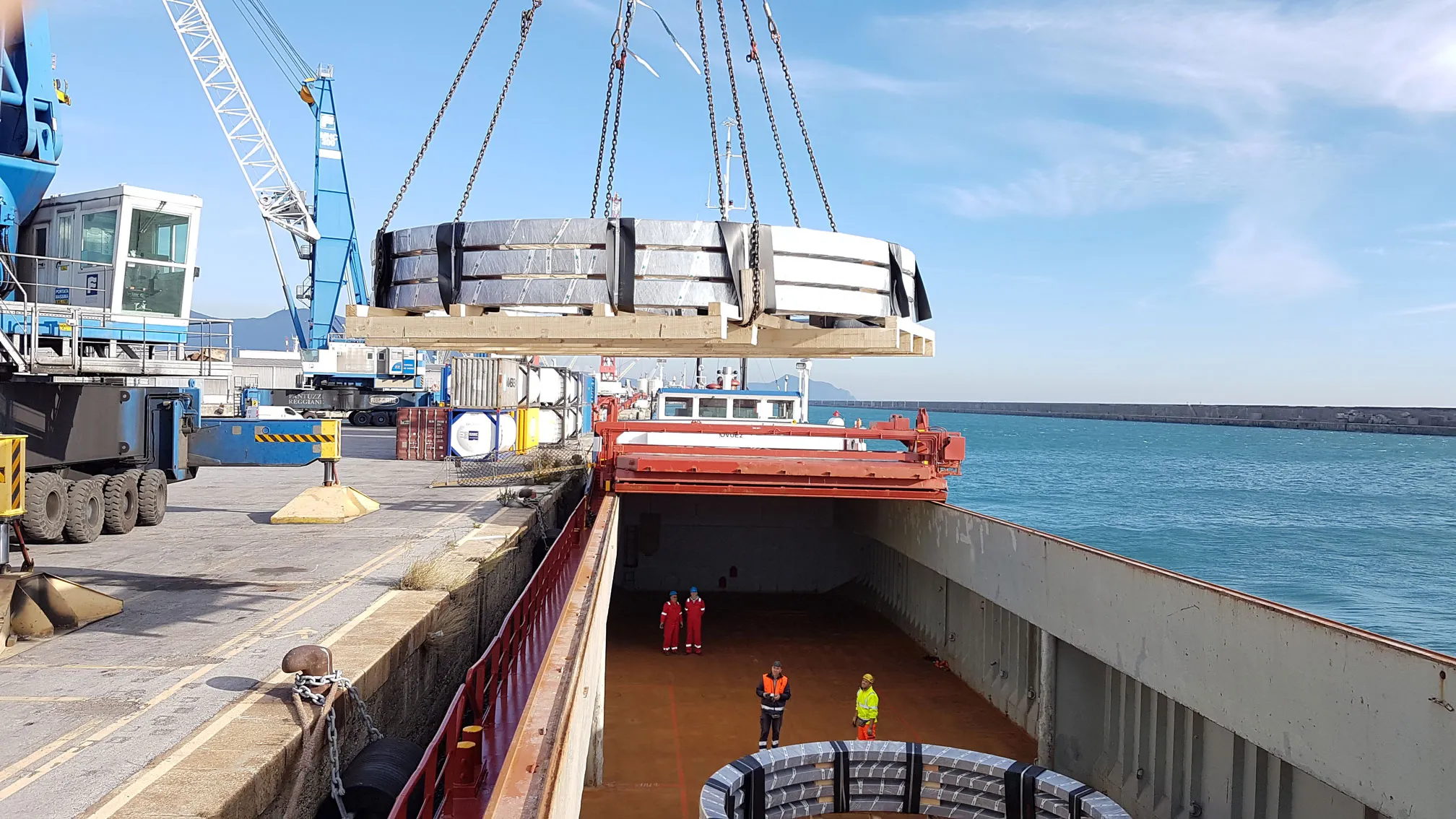
Ocean Cargo provides expert, tailor-made stevedoring solutions across the UK and at key ports worldwide. We act as a pivotal partner to shipowners, charterers, and cargo owners, transforming complex port operations into a seamless, predictable, and cost-effective process. Our highly skilled teams, equipped with state-of-the-art technology and extensive expertise, ensure that your cargo, regardless of its nature, is handled with the precision and professionalism it deserves.
Stevedoring: Beyond the Crane Hook
At its core, stevedoring refers to the complete process of transferring cargo between a vessel and the quay. The term itself originates from the Spanish 'estibador', meaning one who stows cargo. A modern stevedoring operation, however, is a sophisticated, multi-faceted discipline that requires meticulous planning, technical skill, and robust management. It is the critical link that connects sea freight with inland transportation networks like road freight.
The responsibilities of a stevedoring company like Ocean Cargo extend far beyond the physical act of loading and unloading. We are integral to port logistics, responsible for planning the stowage of a vessel to ensure its stability, managing the safe and efficient use of port equipment, and coordinating with the vessel’s crew and port authorities. A successful stevedoring operation minimises a vessel's time at berth, directly impacting the profitability of a voyage and the efficiency of the entire supply chain.
Our Comprehensive Stevedoring Services: A Solution for Every Cargo Type
Ocean Cargo has the capability and experience to handle the full spectrum of cargo types. Our services are not one-size-fits-all; they are adapted to the unique characteristics of each commodity and the specific requirements of every client. Our expertise ensures that whether your cargo is bulk, breakbulk, containerised, or a complex piece of project machinery, it is handled with optimal efficiency and care.
Containerised Cargo Handling
Handling standard ISO containers requires speed, precision, and advanced technology. Our teams are proficient in operating gantry cranes and container handling equipment to load and discharge container vessels swiftly. We manage the entire terminal process, including securing containers with twist-locks, tracking their position in the yard, and ensuring seamless handovers for onward transport. This efficiency is vital for liner services operating on tight schedules.
Breakbulk and General Cargo
Breakbulk cargo, which consists of goods that must be loaded individually rather than in containers, requires a different level of skill and care. This category includes items like steel coils, timber bundles, paper reels, and bagged commodities. Our stevedores are experts in creating bespoke lifting and stowage plans for these non-uniform items. We utilise specialised slings, spreader beams, and handling attachments to ensure that goods are moved without damage and stowed securely within the vessel's hold to prevent shifting during the voyage.
Bulk Cargo Operations
From grains and aggregates to coal and biomass, handling bulk cargo requires specialised equipment and a focus on speed and environmental control. Ocean Cargo manages bulk operations using high-capacity grabs, hoppers, and conveyor systems to ensure rapid loading or discharge. We implement stringent dust suppression and spillage control measures to protect the port environment and minimise cargo loss, adhering to all relevant environmental and port regulations.
Project Cargo and Heavy-Lift Stevedoring
This is where our expertise truly shines. Project cargo involves the handling of oversized, overweight, and often irreplaceable items for major industrial projects. We specialise in the stevedoring of critical components, including wind turbine components, power plant transformers, and heavy mining equipment. Our service includes:
- Detailed Method Statements: We produce comprehensive lift plans and method statements that detail every step of the operation.
- Engineering Support: Our teams work with marine engineers and surveyors to calculate lift points, ensure vessel stability, and design custom lashing and securing arrangements.
- Specialised Equipment: We deploy heavy-lift cranes, either shore-based or vessel-mounted, and utilise Self-Propelled Modular Transporters (SPMTs) for moving enormous items on the quay.
- Expert Supervision: Every heavy-lift operation is overseen by an experienced supervisor, ensuring the plan is executed flawlessly and safely.
The Ocean Cargo Stevedoring Process: A Framework for Excellence
Our commitment to operational excellence is embodied in our systematic approach to every stevedoring project. This structured process ensures consistency, safety, and efficiency, regardless of the cargo's complexity.
- Initial Consultation and Planning: We begin by working closely with you to understand the cargo's characteristics, the vessel's specifications, and your timeline. A dedicated manager develops a preliminary operational plan and a detailed cost proposal.
- Stowage and Lift Planning: Our technical team creates a detailed stowage plan, optimising space within the vessel while ensuring stability and safe segregation of cargo. For complex lifts, a complete engineering study and lift plan are developed.
- Resource and Equipment Allocation: We allocate the necessary skilled labour and select the precise equipment for the job, from the right size of crane to the specific type of lifting gear or attachments required.
- Pre-Arrival Coordination: Before the vessel's berth, we coordinate with port authorities, pilots, and tugs. All necessary customs documentation and port clearances are prepared in advance to prevent administrative delays.
- Supervised Execution: Our on-site supervisor manages the entire loading or unloading operation, serving as the single point of contact. They conduct pre-work safety briefings and oversee every lift, ensuring strict adherence to the plan.
- Real-Time Reporting and Communication: We provide you with regular progress updates throughout the operation. Our use of technology enables real-time tracking and transparent reporting, providing you with complete visibility.
- Finalisation and Post-Operation Review: Upon completion, we ensure all cargo is correctly tallied and documented. We conduct a post-operation review to identify any opportunities for further efficiency gains in future projects.
Safety and Compliance: The Bedrock of Our Operations
In stevedoring, there is no compromise on safety. A safe operation is an efficient operation. Ocean Cargo's culture is built around an unwavering commitment to the highest Health, Safety, Security, Environmental, and Quality (HSSEQ) standards. This is not just a policy document; it is practised on the ground, every day.
- Rigorous Training: Our stevedores undergo continuous training and certification, ensuring they are proficient in the latest handling techniques, safety protocols, and the operation of equipment.
- Risk Assessment: Thorough risk assessments are conducted for every single operation. We identify potential hazards and implement robust control measures to mitigate them before work commences.
- Personal Protective Equipment (PPE): We enforce the mandatory use of appropriate, high-quality PPE for all personnel involved in the operation.
- Regulatory Adherence: We maintain full compliance with all UK Health & Safety Executive (HSE) regulations, port-specific bylaws, and international maritime safety codes.
- Environmental Responsibility: We are committed to minimising the environmental impact of our operations, with strict procedures for waste management and the prevention of pollution.
Frequently Asked Questions
What is the difference between a stevedore and a longshoreman?
Historically, the terms were used differently, but in modern UK and international usage, they are largely interchangeable. Both refer to port workers responsible for loading and unloading ships. At Ocean Cargo, we use the term 'stevedore' to encompass the full range of skilled professionals involved in planning, supervising, and executing cargo operations.
How does Ocean Cargo ensure the safety of oversized or heavy cargo during lifting?
The safety of heavy-lifts is guaranteed through meticulous planning. Our process involves creating a detailed, engineered lift plan, using certified and regularly inspected lifting gear, and ensuring the crane's capacity is appropriate for the load. A qualified supervisor oversees every aspect of the lift, from securing the rigging to the final placement, ensuring zero harm to the cargo or personnel.
Can you provide stevedoring services in ports where Ocean Cargo does not have a physical office?
Yes. Through our extensive global network of vetted and trusted technical partners, we can manage and deliver high-quality stevedoring services at most major ports worldwide. We provide a single point of contact and accountability, ensuring the same high standards of safety and efficiency are consistently applied, regardless of the location.
What factors influence the cost of stevedoring services?
The cost is influenced by several factors, including the type of cargo (bulk, breakbulk, etc.), the total tonnage or volume, the complexity of the operation (e.g., a standard container vs. a heavy-lift), the labour and equipment required, and the specific port's tariff rates. Ocean Cargo provides a detailed and transparent quote upfront, breaking down all associated costs.
How do you handle dangerous goods?
The handling of Dangerous Goods is governed by the International Maritime Dangerous Goods (IMDG) Code. Our teams are fully trained and certified in these regulations. We ensure that correct segregation, placarding, and handling procedures are strictly followed, and we coordinate with all port and vessel authorities to guarantee safe and compliant operations.
How much notice is required to arrange a stevedoring service?
For standard cargo, a few days' notice is often sufficient. However, for complex project cargo or heavy-lifts, we recommend engaging with us as early as possible in your project planning phase. This allows adequate time for detailed technical planning, engineering, and resource allocation to ensure a flawless operation.
